
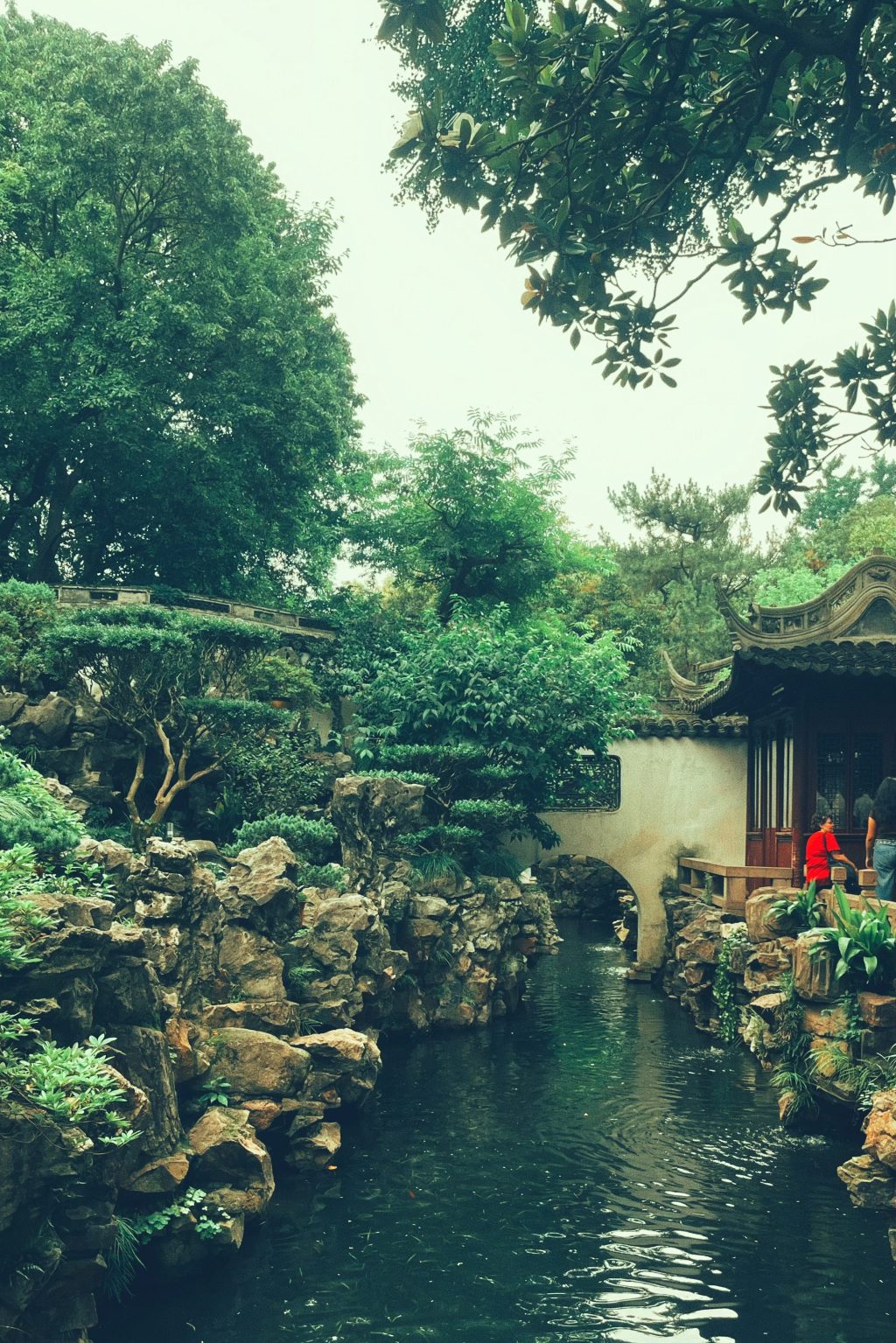
Shanghai is a city that swirls in a relentless rhythm. It is incredibly easy to be swept into the vortex of steel and glass towers piercing the sky or the sprawling avenues blazing with neon lights. Yet, if you are willing to drop your shoulders, take a step back, and wander into the old quarters, you will encounter Yuyuan Garden, a quintessential Jiangnan garden sitting in profound silence amidst the endless urban chaos.
The garden of filial piety and the folds of time
This space was not born from the regal ambitions of an emperor. It stems from a profound yet simple compassion of the human realm, when the Ming dynasty official Pan Yunduan resolved to cultivate a peaceful sanctuary for his aging parents. The word Yu in its name conceals a deep implication of peace and joy. Through over four hundred years of turbulent history and the shifting tides of eras, the noble families who once owned this place have all faded into the past. However, every artificial mountain, every patch of grass, and the still waters remain patient, gently embracing the heartbeat of time.
A lingering pace across the Nine-Turn Bridge
Before truly stepping into that silent realm, the traveler must cross the Nine-Turn Bridge. The origin of these meandering zigzags stems from a folklore belief intended to ward off evil spirits who supposedly can only travel in straight lines. But through the lens of one who meditates via observation, this architecture carries a much more profoundly soothing philosophy.
The bridge forces our hurried feet to slow down. Every change of direction on its surface is an invitation to pause our breath, to cast our gaze upon the koi fish swimming beneath the water, or to admire the sweeping curved roof of the Huxin Pavilion casting its shattered reflection. That winding path gently teaches us that beauty does not always lie at the destination. It resides in our ability to leisurely embrace every fleeting moment of the present, allowing ourselves to simply stop and witness the world.
The coiled dragon wall and the moon gate frames
The architectural art of Yuyuan is the pinnacle of borrowing scenery and shaping space. Enveloping the garden is a pristine white wall, highlighted by an undulating tiled roof resembling a sleeping gray dragon. That dark terracotta sculpture bears absolutely no fierce authority. Instead, it curves with utmost softness, playing the role of a forgiving guardian sheltering the myriad plants within.
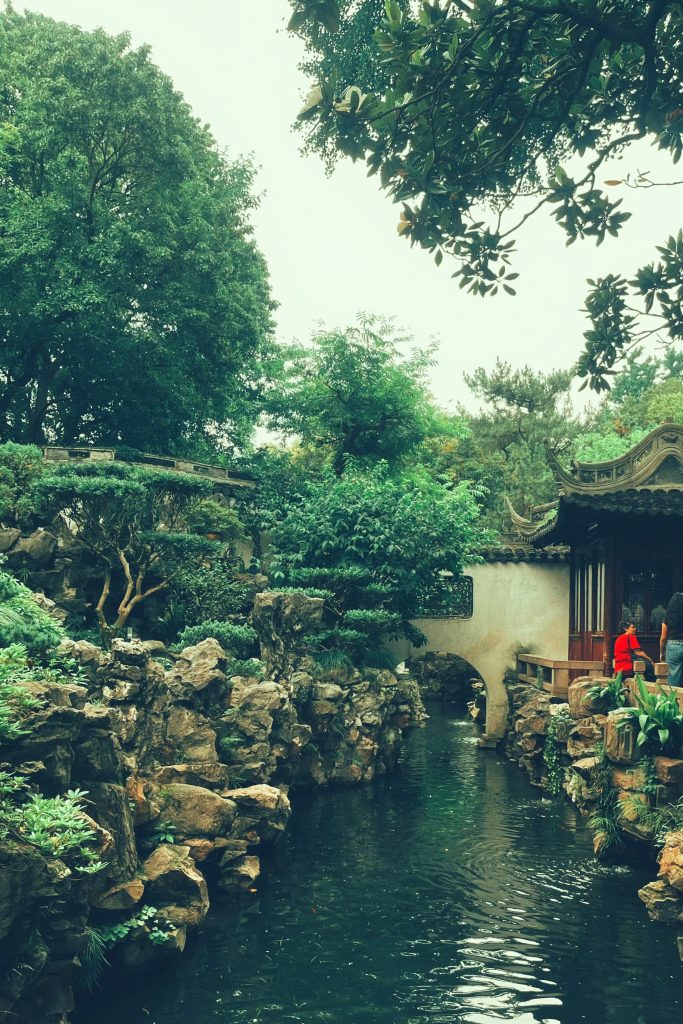
Walking along the deep corridors, you will continuously encounter moon gates and intricately carved windows. Every opened frame acts as a picture frame, capturing the complete metamorphosis of flora, sunlight, and wind into a single tranquil perspective. Standing before a gray stone arch, watching a willow branch trail its shadow on the lake, we feel as though we are admiring an endlessly unfolding ink wash painting, a place where all things rely on one another to shine.
A sacred void amidst the mortal realm
Just a wall away from Yuyuan is the chaotic bustle of the City God Temple market. Yet, all the noise of daily life seems to be compressed and dissolved the moment a traveler steps through the gate. The garden utilizes rugged Taihu stones, hollowed out by time, to construct towering artificial mountains, bringing the very grandeur of majestic peaks into a confined courtyard.
By distilling the purest essence of nature, the artisans of old created a sacred void. In that place, human beings shed all their brilliant identities, leaving only absolute stillness to listen to the babbling water and the rustling of bamboo leaves gently touching one another. Yuyuan is indeed an architectural therapy for the soul. It reminds us that amidst a life forever rushing forward, we always need solitary anchors to nurture our deepest emotional undercurrents.
Andy On The Go.




















 Andy On The Go
Leave a comment