
By Andy On The Go
Have you ever wondered how our lives might transform if we could dwell within the minds of architectural geniuses?
To choose a life inside the spaces of Frank Gehry, Zaha Hadid, or Frank Lloyd Wright is more than a matter of aesthetic taste. It is a litmus test of temperament, a way for us to define our place within this vast world. We often find ourselves lost in admiration for flamboyant icons, yet we rarely pause to ask if we can truly breathe within them.
Frank Lloyd Wright: A Symphony Amidst the Ancient Forest
If architecture is often seen as a conquest of nature, for Wright, it was a profound reconciliation. Look at Fallingwater, the villa nestled deep in the Pennsylvania woods. It is not merely a house perched upon a waterfall, it feels as though it has grown directly from those moss-covered stones.
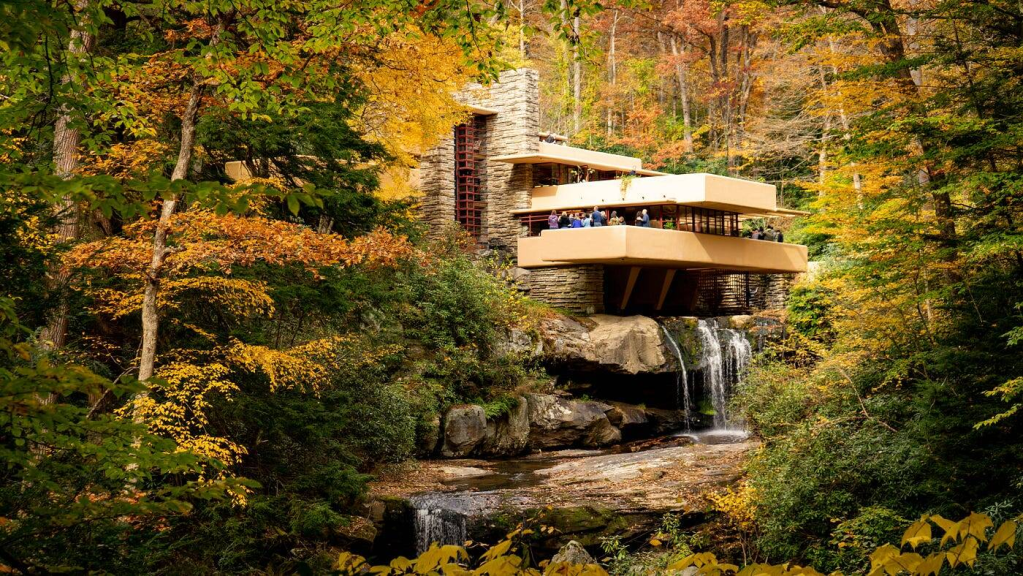
By using local stone to craft the walls, Wright imbued the house with the very colors of the earth and the forest. The concrete balconies, stretching out parallel to the water, resemble ancient branches reaching for the sun.
Inside, the boundaries between the world out there and the life in here simply vanish. Low ceilings evoke the cozy shelter of a cave, while raw stone floors feel cool and grounding beneath bare feet. To live here is to breathe in rhythm with the falling water. This is the pinnacle of Organic Architecture, where one finds absolute stillness in the realization that we are but a small, harmonious fragment of creation.
Zaha Hadid: Dreams of Weightlessness
While Wright sought the embrace of Mother Earth, Zaha Hadid yearned to liberate architecture from gravity. She rejected the right angle, believing that nature knows no straight lines.
The Heydar Aliyev Center in Baku is the most radiant embodiment of this philosophy. Amidst a forest of rigid, boxy concrete, the structure emerges like a giant silk veil draped from the sky.
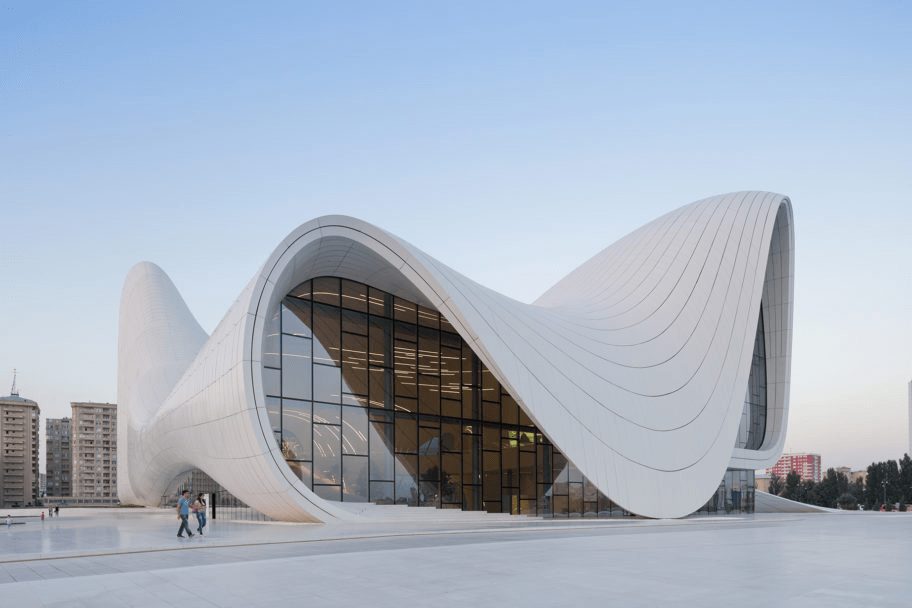
There are no pillars to obstruct the gaze, no sharp divisions between wall, roof, or floor. Everything melts into an endless, fluid stream. Its pristine white shell reflects the shifting light, making the building appear to float rather than stand. Stepping inside is like entering a futuristic world, a place that ignites the imagination and offers the absolute freedom of weightless dreams.
Frank Gehry: The Dance of Chaos
Distinct from Wright’s silence or Zaha’s fluidity, Frank Gehry brings an explosion. He shatters the old order to restructure it with raw spontaneity.
The Guggenheim Bilbao by the Nervión River resembles a surreal ship run aground, or perhaps a strange metallic flower in full bloom. Its paper-thin titanium skin shifts color with every passing moment—golden like honey one minute, cold silver the next.
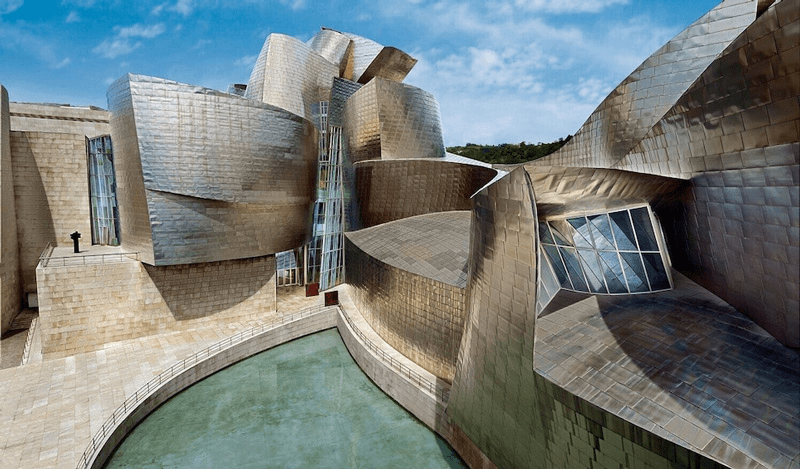
The colliding, concave, and convex forms create a surging energy. It awakens every sense, forcing us to re-examine our very definition of beauty.
Reflecting on all three, the choice becomes clear. Gehry offers the thrill of discovery. Zaha grants us a visionary dream. But only Wright and Fallingwater offer a true sense of coming home.
A house should never be a place where we feel small or estranged. It must be a sanctuary that cradles us, a place where we are permitted to live slowly. One day, when the urge to leave the clamor of the city behind becomes too strong, perhaps you and I will find our own piece of earth. And there, we will let our home grow from the ground—natural, and at peace.
























 Andy On The Go
Leave a comment