
An Dang, Strategic Planning Director, Omega Media
“Because real revenue comes from keeping customers, not just from acquiring more of them”
An Dang
Growth doesn’t come from traffic; it comes from people who return. The ones who quietly come back the second, third, and fourth time are the ones who keep your business alive in the long run.
There was a time when most companies and partners we worked with focused only on acquisition campaigns: app installs went up, traffic looked great, the reports were shiny.
But then customers (users) fell away—no one came back.
And that’s when we realized: what we lacked wasn’t new users; it was a reason for existing users to stay.
Why is retention real growth?
The cost of acquiring a new customer is always higher than retaining an existing one. According to Harvard Business Review, acquiring a new customer can cost 5 to 25 times more than keeping a current one.
As for existing customers: if they’re satisfied, they don’t just repurchase—they also refer friends, leading to natural and sustainable growth. Returning customers spend about 33% more than new customers (Invesp CRO).
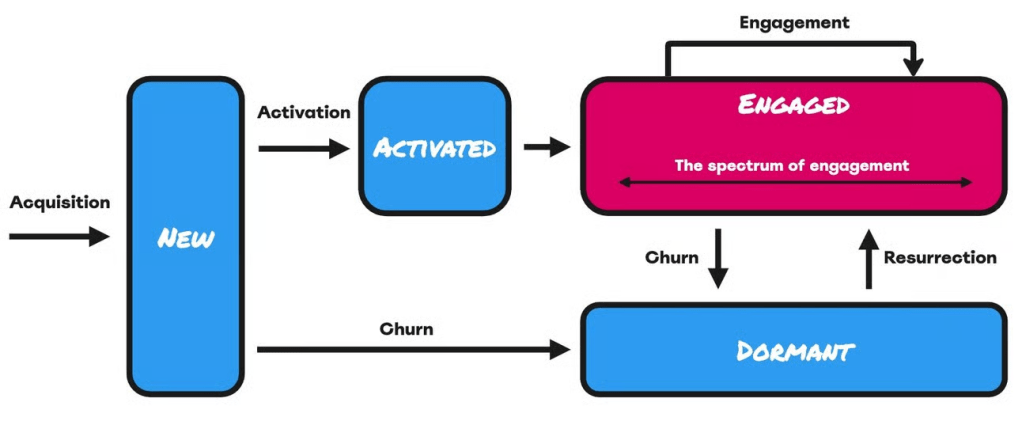
The Activation–Engagement–Resurrection (AER) model
* Activation: Bring users to the “aha moment”—the moment they see the product’s real value.
Duolingo cleverly activates learners with the very first streak, creating an immediate sense of achievement.
* Engagement: Don’t let them drift away.
Spotify sends the right Daily Mix, Netflix recommends the right film, MoMo personalizes offers based on behavior. That subtle but consistent presence is the key.
* Resurrection: Reactivate users who have gone quiet. Shopee sends exclusive discount codes to people who haven’t opened the app for seven days. No noise—just the right nudge at the right time.
Frameworks for doing retention properly
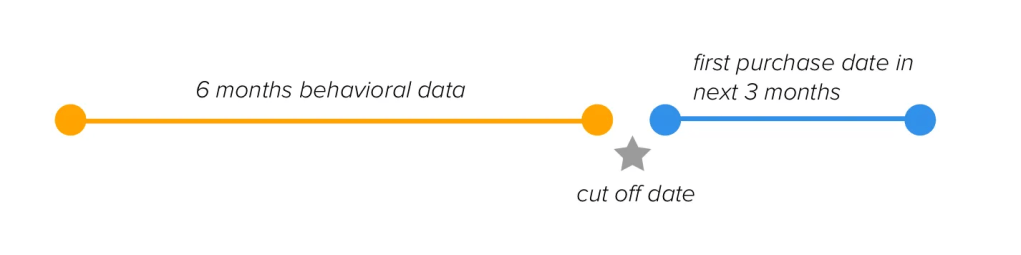
Next Purchase Model — Predict who will buy again, and when
On Shopee or Tiki: if a user buys diapers every 30 days, the system will suggest the product, bundles, or promotions around day 25–28. Sending email/push at the right time can increase repeat purchases 3–5x.
For banks and fintech: based on historical data, you can track cash-in/cash-out cycles, e-wallet transactions, and installment schedules → then suggest renewals, additional credit, or new packages at the right moment.
Bottom line: “Don’t ask how to make users repurchase. Ask when they will repurchase—and how you can be there at that exact moment!”
Tools: MoEngage, Insider, CleverTap, Salesforce Marketing Cloud, or build your own with BI tools (SQL, Google BigQuery + Python/R).
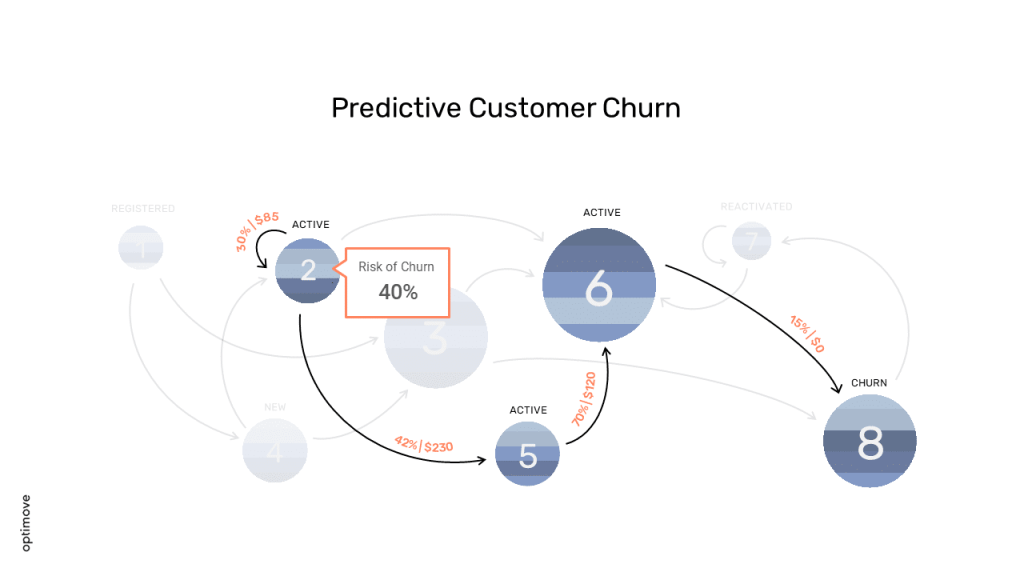
Predictive Churn — Detect who’s likely to leave before they disappear
Predictive churn uses behavioral signals and machine learning to calculate a Churn Probability—the likelihood a specific user will churn soon.
Spotify and Netflix can “sense” when listening time or playlist saves drop → churn risk rises → they suggest new playlists or offer a trial month of Premium.
Shopee: a user who used to order every 10 days hasn’t opened the app in 20 → high churn risk → Shopee sends a personalized “come back” code and a reminder of previously liked items → increases the chance of a repeat purchase.
Bottom line: “Retention isn’t just reactive. Retention is anticipation and proactivity.”
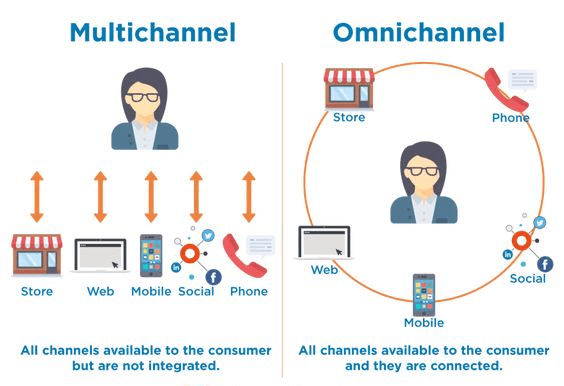
CDP and Omnichannel CRM — One customer view, consistent conversation
Combine all data from web, app, email, and offline into a single customer profile so you can retain people in the most fitting way.
A CDP tells you who the customer is, where they came from, what they do, and what they like across channels.
Omnichannel CRM lets you speak to them at the right time, in the right place, with the right tone, wherever they are in the journey.

Cases: 7-Eleven Vietnam & MoEngage
– Aggregate data from the app, in-store QR scans, email, and SMS
– Create personalized segments for specific groups: morning shoppers, evening shoppers, combo shoppers…
– Results: +78% Monthly Active Users, +20% stickiness

Simple but effective retention tactics
– Design a truly smooth onboarding: get customers to the first value as fast as possible. Suggest the next behavior: after purchase, invite a review—maybe with coins, or simply a sincere thank-you.
– Orchestrate push/email/SMS at behavioral moments.
– Build a small loyalty program tied to real experiences—no need to be flashy, as long as it can repeat.
– Measure right, start small, repeat: track retention by cohort (D1, D7, D30).
– Start with a simple retention loop: review → earn coins → buy again.
– Track the time between returns; increasing it increases value.
Bonus: Real data from the Vietnam market
- Adjust 2025 (Entertainment apps, Vietnam):
- Day-1 retention: 8%
- Day-7 retention: 2%
- Day-30 retention: 1%
- MoEngage shows Vietnamese users tend to engage more with multi-channel notifications:
- 15.2% like push product suggestions
- 23.6% track shipping info via email
- 16.8% want authentication via SMS
Real case studies
- MoMo: Personalizes offer bundles and sends push notifications at the times users typically engage. Gentle reminders of features they often use. No spam. Very “MoMo.”
- Biti’s Hunter: Rewards points for each review and share. Users feel useful and rewarded, so they return more and invite friends.
- Netflix: Not only are film recommendations personalized—the posters are, too. An action fan sees a different poster than a romance fan for the same title. That’s deep personalization.
- Shopee: A closed loop: purchase → earn coins → spend coins → review → earn more → share with a friend → the loop spins again.
Closing
Growth isn’t sexy. It isn’t a viral campaign. It’s the customer who comes back in week two. It’s the push sent at the right time. It’s the gentle invitation to stay—and then bring along someone new.
Retention isn’t the “end of the funnel.” Retention is the foundation of all long-term growth.
Andy On The Go
Saigon, 26.07.2025














































 Andy On The Go
Leave a comment