
by An Dang, Strategic Planning Director, Omega Media.
“When marketing can’t ‘carry’ on its own, growth becomes the work of the entire organization.”
An Dang
For years, many companies handed “growth” almost entirely to Marketing: drive traffic, run ads, fix conversion, and even answer for churn. The truth is simpler and tougher: you can bring in millions of visits, but if the product isn’t compelling, pricing isn’t right, or after-sales doesn’t retain customers, your marketing spend evaporates. Growth has never been a single-department problem; it’s a cross-functional system.
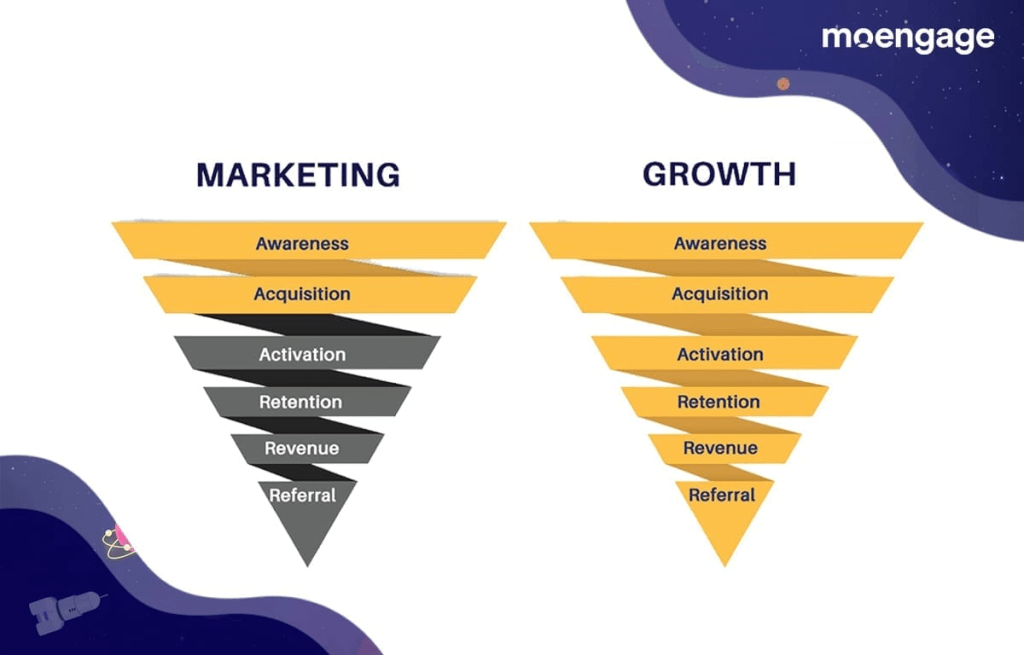
Core Structure: Cross‑Functional by Design
A good growth team doesn’t need to be large—but it must be cross‑functional and accountable to shared outcomes:
• Marketing: attract demand and shape intent
• Product: optimize the experience and onboarding
• Data/BI: analyze behavior, model impact, recommend changes
• CS/CRM: retain, upsell, and catalyze advocacy
• Sales (if applicable): convert qualified demand into revenue
They don’t just “meet together”; they share KPIs, dashboards, and run rapid tests end‑to‑end.
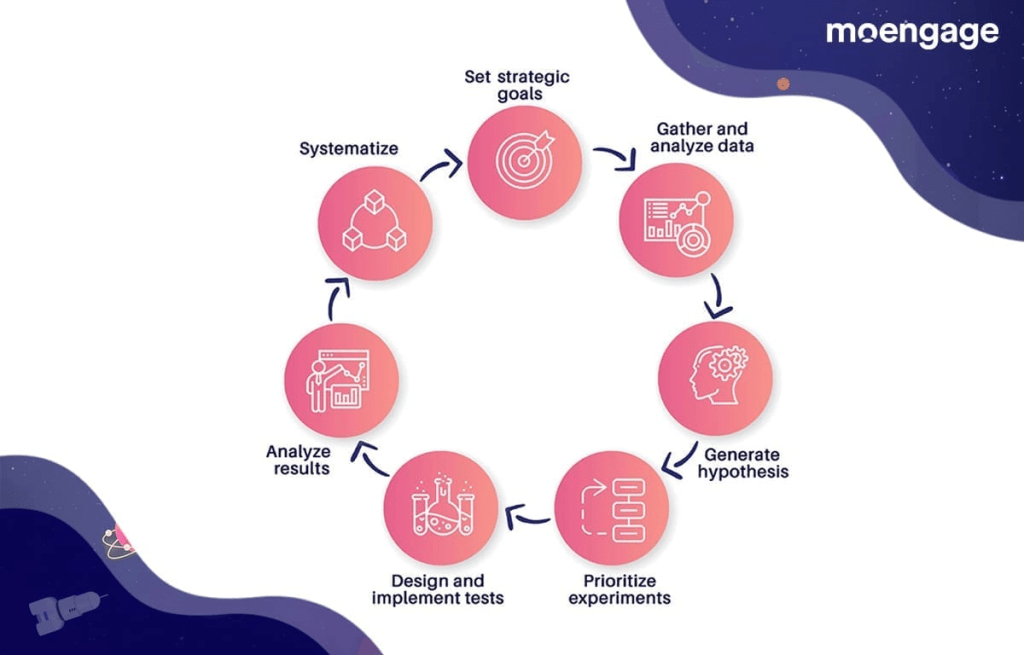
Three Maturity Stages

Case Studies
Airbnb: The Squad Model
Squads own specific problems in the customer journey and are staffed cross‑functionally (dev, design, product, marketing, data). Example squads: Acquisition, Activation, Retention, Referral. Each operates like a mini‑startup inside the larger system—fast and autonomous.

MoMo: Cross‑Functional Growth in Practice
MoMo’s growth function spans CRM, product, data, performance, and even operations.
Every feature or program launch includes: an insight owner, an in‑app flow designer, an A/B owner for onboarding, and an analyst monitoring bounce, drop‑off, and CTR by cohort.
The result: faster feature delivery, lower media waste, and stronger D7 retention.

Operating Principles
1) Growth is a mindset, not a title: the learn–test–measure–iterate loop must live across functions.
2) Start with the second question: “What happens after the first visit?” Traffic without post‑visit optimization is budget leakage.
3) Optimize for feedback‑loop speed: a 3‑person team that ships tests weekly outperforms a 20‑person team waiting two weeks for approvals.
A Practical Checklist
• Who specifically owns Retention?
• Do teams share growth‑critical KPIs or does each chase isolated targets?
• What tools enable rapid testing? How many experiments shipped in the last 90 days?
• Are data analysts partnering tightly with Marketing and Product to recommend actions?
Closing notes
Growth is not “Marketing’s problem.” It is operating discipline. You don’t need a massive org chart to start—just the right question and shared ownership: Where exactly are users dropping, and who will partner to fix it? When every function shares responsibility, data, and cadence, growth stops being luck and becomes a natural outcome.
Ref Link
https://www.moengage.com/ebooks/the-growth-strategy-handbook
https://fourweekmba.com/cross-departmental-collaboration/
https://www.tcgen.com/program-management/cross-functional-team/
VN Link: https://andyonthego.me/2025/07/22/growthseries-art03/
AIM Academy: https://aimacademy.vn/giang-vien/an-dang/
An Dang
Sài Gòn, 22.07.2025














































 Andy On The Go
Leave a comment