
By Andy Dang – Strategic Planning Director, Omega Media
When campaigns are no longer enough.
Over the past decade of working with brands across industries in Vietnam, a recurring trend has become evident: many organizations equate growth with the success of a single, large-scale campaign—typically driven by the marketing department. The assumption is that sufficient media spend and a compelling offer will yield sustainable customer acquisition.
While such campaigns may generate impressive short-term metrics—spikes in installs, website visits, and social engagement—they often fail to establish long-term value. Retention rates drop, acquisition costs rise, and the cycle repeats.
This is not sustainable growth. It is a series of expensive, short-lived spikes.
Growth doesn’t come from media—it comes from experience
The era of media-driven growth is rapidly losing ground. In today’s oversaturated market, consumers are inundated with offers and promotions, and novelty wears off quickly. What endures is not what attracts, but what resonates.
Sustainable growth emerges from delivering genuine value throughout the user journey. Companies must shift from asking: “How do we increase visibility?” to: “What experiences make users stay, return, and advocate for us?”
This shift marks the evolution from a linear funnel mindset to a dynamic growth loop framework.
Growth Loop: Design for repeatable, scalable behavior
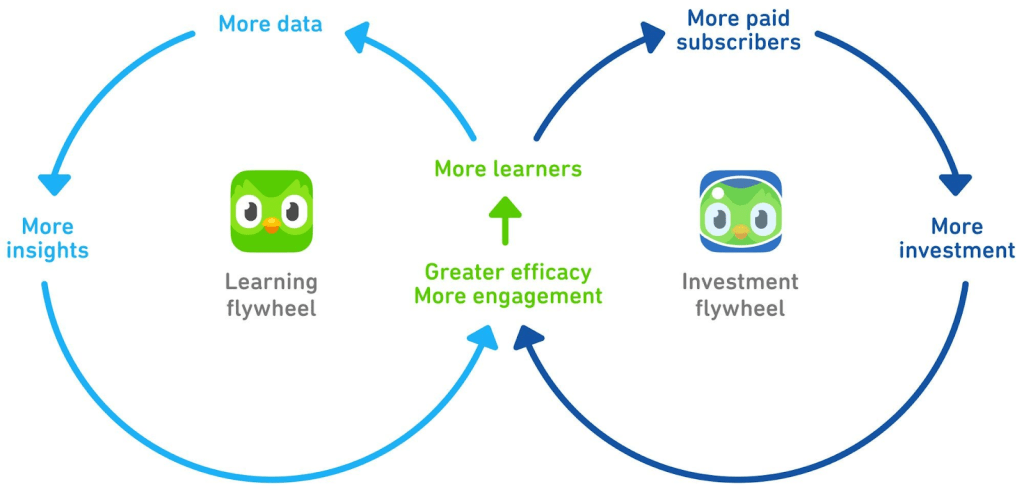
A growth loop is a self-sustaining cycle where each new user not only converts but contributes to acquiring more users. Unlike traditional marketing funnels, which are optimized for one-way conversion, growth loops compound impact over time.
Illustrative examples:
– Dropbox incentivized referrals with additional cloud storage.
– Duolingo employed gamified engagement mechanics to drive daily retention.
– TikTok transformed passive viewers into active content creators, fueling exponential network effects.
These are not one-off tactics—they are structural components of product design that embed virality and retention into the user experience.
O2O2O: When customer journeys are no longer linear
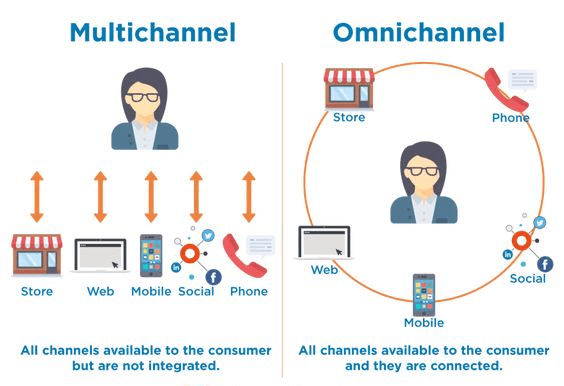
In Vietnam and beyond, the Online–Offline–Online (O2O2O) model is redefining customer engagement. Today’s consumers seamlessly move between digital and physical touchpoints, expecting continuity and personalization.
Consider the following journey:
– A consumer encounters a product via online media.
– Visits a physical retail location for hands-on experience.
– Completes a transaction and returns online to claim loyalty rewards or engage further.
Case in point:
– MoMo integrates digital utility with in-store payments and app-based loyalty.
– 7-Eleven Vietnam employs CRM personalization to enhance post-purchase touchpoints.
– Circle K connects app loyalty programs to in-store behavior.
The challenge is not channel fragmentation, but data orchestration across the entire journey.

Retention is the real revenue
The true financial engine of any digital business lies not in acquisition, but in retention. As per AppsFlyer’s SEA Benchmark 2025:
– High-retention apps yield 2.3x higher revenue than those with low retention.
– Retaining a customer costs significantly less—between 4 and 7 times—than acquiring a new one.
– A small cohort (top 20%) of retained users often contributes 80% of total app revenue.
Effective retention strategies encompass:
– Personalized onboarding experiences
– Timely and contextual engagement
– Data-driven lifecycle marketing automation
Retention is not merely a post-conversion metric. It is the cornerstone of long-term unit economics.
Growth is not a department. It’s a cross-functional system
True growth cannot be siloed within the marketing department. It is a company-wide capability that spans disciplines.
An effective growth engine includes:
– Product teams capable of translating user insight into experience design.
– Data teams focused on actionable metrics, not vanity KPIs.
– Engineering teams agile enough to iterate at speed.
– CX and content teams aligned in voice and timing.
– Strategic leadership that enables rapid cross-functional collaboration.
Leading organizations are replacing hierarchical structures with cross-functional pods, each accountable for a specific segment of the growth journey.
Final thought: Growth is not fireworks. It’s the flow.
Campaigns may generate short-term excitement, but sustainable growth is achieved through systemic flow—where value is created, measured, optimized, and repeated continuously.
Ask not:
“How do we get more people to notice us?”
Ask instead:
“How do we repeatedly deliver value to the right user, at the right time, more efficiently each cycle?”
When this is achieved, growth ceases to be episodic—and becomes perpetual.
Andy Dang
References
Adjust Vietnam Report 2025/AppsFlyer SEA Benchmarks 2025/Andreessen Horowitz Growth Playbook/McKinsey Digital Transformation Index




































 Andy On The Go
Leave a comment