
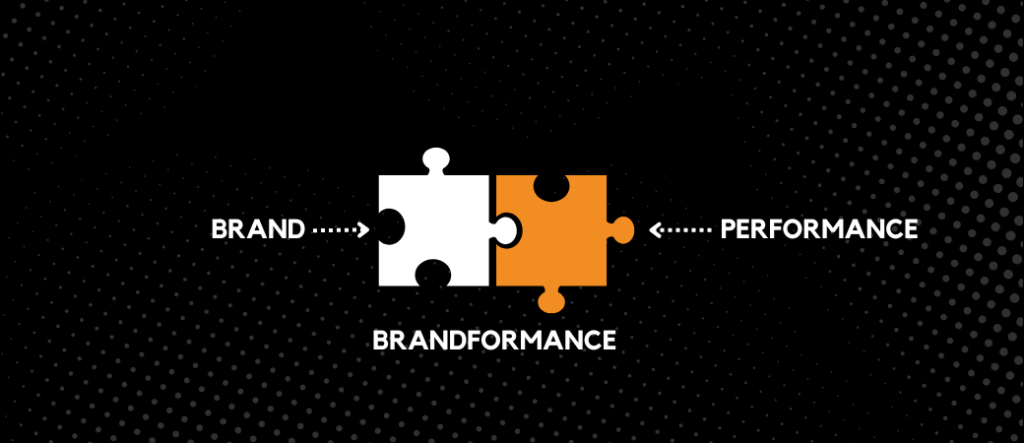
by An Dang, Strategic Planning Director, Omega Media.
“This is not a theoretical question. It is a very practical choice.”
During a strategy consultation, a young founder once asked me bluntly: “Should we invest in branding to build the image, or focus on performance ads to drive revenue first? Can brand work actually lead to orders?”
The question is not new. But whenever I hear it, I do not answer immediately. This is not a textbook exercise. It is the real dilemma of someone living under pressure: tight budgets, heavy KPIs, cash flow needs that cannot wait, and the anxiety that performance suddenly does not perform like it used to.
The quick answer: both are needed. The honest answer: you must know where you are, what you need now, and when the two can be orchestrated to create real, durable growth.
Brand helps you endure. Performance helps you survive.
Performance delivers clear, measurable, immediate outcomes. Brand is slower and fuzzier, yet it is the only thing that makes people remember you, trust you, and come back even when you are not the cheapest. If performance brings people in today, brand brings them back tomorrow. In short, performance grows the numbers, brand makes growth sustainable.

Branding is not “making things pretty”
Branding is not a logo, a color palette, or a touching video. It is how you show up at every touchpoint, the story you tell, and the feeling you leave behind after every interaction. A strong brand reduces advertising costs, improves conversion rates, makes market expansion easier, and, importantly, enables premium pricing.
Airbnb is a clear example.
In 2014–2015, they allocated most of their budget to digital advertising to scale quickly. Costs rose while loyalty lagged. From 2019 onward they shifted investment into brand: telling the “belong anywhere” story, reworking the user experience, and aligning a global message. The result: organic search grew, ad dependence dropped, and Airbnb moved from being just a booking site to becoming a lifestyle.
But if you ignore performance, you may not make it to tomorrow
Performance marketing lets you test market reaction, measure real demand, generate real cash flow, and learn a great deal from data.
Coolmate is a practical, local case.
At the beginning, they did not chase a grand brand narrative. They focused on performance: A/B testing, landing page optimization, data capture, remarketing. This helped them quickly find a model that fit modern men: convenient, streamlined, solid quality. Only then did they start telling the brand story: made in Vietnam, environmental responsibility, transparent operations.
When the brand became clearer, ads performed better, customers returned more often, and the brand began to be remembered, not just purchased once.
So how do you combine both?
Many brands say they want to do both “brand and performance,” yet they split teams, KPIs, and goals. Each side runs in a different direction. The outcome: a beautiful brand no one buys, and ads that sell but leave no memory.
Brand-formance is not “split the budget in half.” It is a systems mindset where emotion and data run in parallel, where narrative and action reinforce each other.

A few proven principles
1) Start from real insight, not a “nice story.” A strong brand campaign requires customer understanding as deep as what you would use to craft a high-converting landing page. Example: the Samsung Z Flip campaign did not just show that the phone “folds.” It tapped into the young audience’s desire to stand out and feel fashion-forward.
2) Design a seamless path from media to point of sale. From TVC and social content to the landing page, email, and customer service messages, keep the message consistent, the visuals coherent, and the tone familiar.
3) Use a flexible P-O-E media mix. Paid builds reach. Owned nurtures the relationship. Earned from KOLs and real customers is the brand lever. Cocoon Vietnam is a good example: topic content, TikTok reviews, SEO and affiliate work together with consistent messaging and experience.
4) Run A/B tests to optimize without losing the brand’s soul. Test headlines, CTAs, and creatives, but do not test to the point where users no longer recognize who you are. Keep positioning, tone, and spirit intact so performance lifts the brand rather than dilutes it.
5) Dual KPI stacks: do not let each team count in isolation. A solid campaign should track both sets of metrics: Brand (brand lift, search interest, recall, brand sentiment) and Performance (CTR, CVR, ROAS, retention).
6) Think in funnels, act in loops. Brand often drives the upper funnel (awareness, consideration). Performance accelerates conversion and retention. Long-term effectiveness comes from continuously measuring, learning, optimizing, retelling, and measuring again.

Closing
Sustainable growth does not come from doing brand or performance “better” in isolation. It comes from connecting the two into a single system: from story to point of sale, from emotion to conversion, from listener to actor.
Brand helps you be remembered and loved. Performance helps you be seen and bought. When orchestrated well, the result is not only growth in numbers but also growth in value.
“The question is no longer ‘brand first or performance first.’ The real question is: How do we make both serve one shared goal—sustainable growth?”
An Dang
Saigon, July 21, 2025
Vietnames version here: https://andyonthego.me/2025/07/21/growthseries-art02/











































 Andy On The Go
Leave a comment